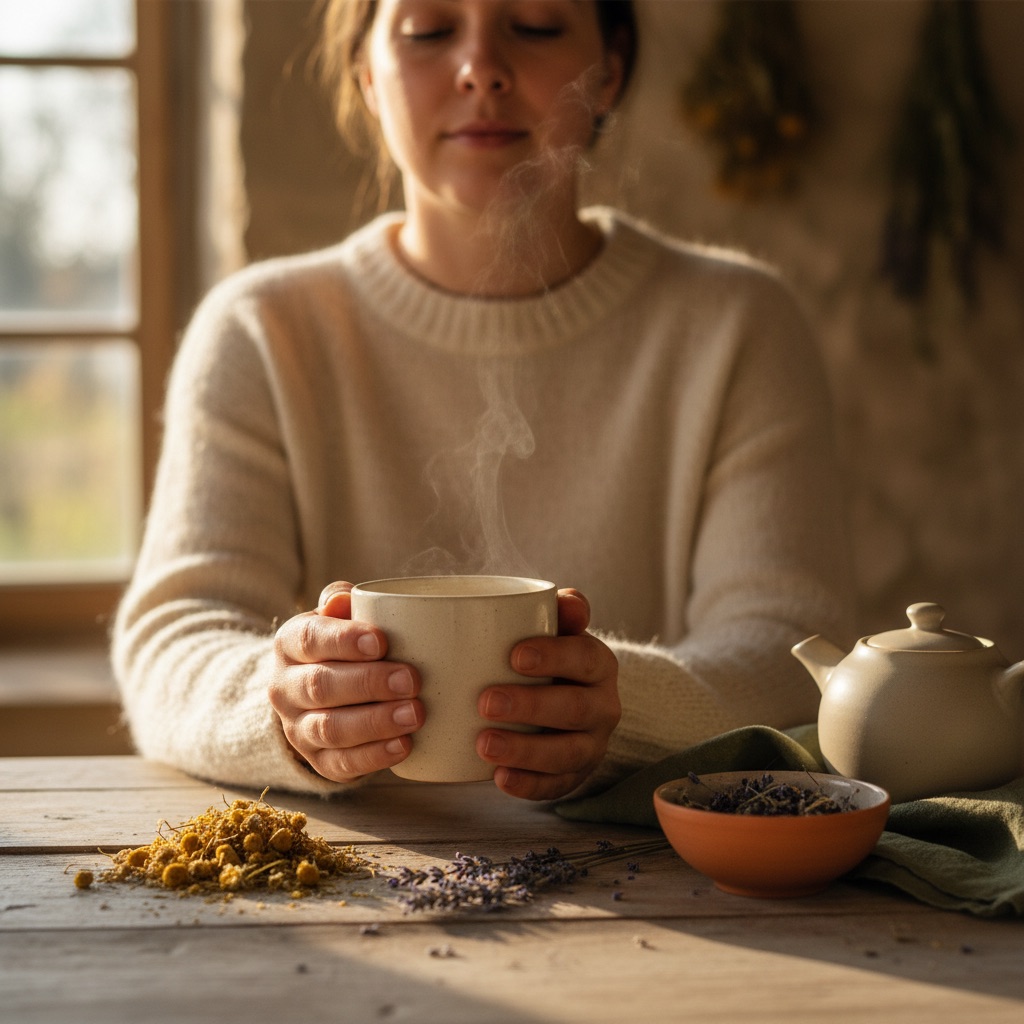
Walk down the tea aisle and the bedtime shelf makes a quiet promise: a box in calm blues, a name like "Nighttime" or "Sleepytime," a sprig of something soothing, and the strong implication that this cup will put you to sleep. For most sleep teas, the honest version of that promise is much smaller than the packaging suggests — and the first thing worth knowing is how small, because it changes what you should be willing to pay for.
This guide starts there, with what a sleep tea can realistically do, and then gives you the method to pick a good one: how to read past a "nighttime blend," verify it's actually caffeine-free, and tell a tea worth brewing from a marketing exercise. We do not rank specific products, because we have not tested them yet, and a ranked list of boxes nobody brewed is the thing we built this site to avoid. What you get is the method, so you can judge any box yourself.
A note first: this is shopping guidance, not medical advice. Persistent trouble sleeping is worth a conversation with a clinician, not a tea — insomnia has causes a bedtime drink will not fix. Herbal teas are sold as foods or supplements, and the FDA does not approve supplements for safety or effectiveness before sale the way it does prescription drugs (FDA). If you're pregnant or breastfeeding, take medication, or have a health condition, check the safety section near the end and talk to your clinician first. For the measured-dose route to the same goal, our magnesium-for-sleep guide is the supplement-side sibling of this one.
What a sleep tea can realistically do
Start with the uncomfortable part, because it protects your money: the evidence that bedtime herbs reliably improve sleep is weak, and the most popular one has been advised against. For valerian, the U.S. government's National Center for Complementary and Integrative Health says plainly that "the evidence on whether valerian is helpful for sleep problems is inconsistent," and that the American Academy of Sleep Medicine "recommended against using valerian for chronic insomnia in adults" in its 2017 guidelines (NCCIH). For chamomile, NCCIH notes there is "very little information on chamomile's effect on insomnia," and a 2019 review "found one study on insomnia, which found no benefit" (NCCIH). Passionflower is the most encouraging of the three, and even there the picture is modest: a small amount of research suggests oral passionflower might improve total sleep time, while its effect on falling and staying asleep is mixed (NCCIH).
There's a second reason to keep expectations modest: dose. A teabag steeped for a few minutes delivers a small and variable amount of herb — far less, and far less consistent, than a measured supplement of the same plant. So even where an herb has some evidence, a tea is the gentlest possible delivery of it.
None of that makes a sleep tea worthless. A warm, caffeine-free drink and ten quiet minutes away from screens is a genuinely good wind-down ritual, and ritual matters for sleep. The honest framing is simply this: buy a sleep tea as a pleasant, low-risk habit that may help you settle — not as a treatment that will reliably knock you out. Once you hold it that way, the buying decision gets clear and cheap to get right.
The decision the box hides: named herbs vs a "nighttime blend"
The single most useful thing you can read off a tea box is whether it tells you what's actually in it. A single-herb tea — just chamomile, just passionflower — is fully legible: you know the plant, and roughly what you're getting. A "nighttime blend" often lists a handful of herbs in descending order with no amounts, which means you cannot tell whether the active herb is a meaningful share of the cup or a token pinch added for the name on the front.
That ambiguity is where money leaks. A blend can lead its ingredient list with a cheap filler herb (a little mint, a little rooibos) and place the herb you're actually buying it for near the end, in trace amounts. The fix is the same one that works across this whole site: prefer a label you can read. A named single herb, or a blend that names its herbs and ideally their amounts, is one you can judge. A proprietary "sleep formula" with no amounts is one you're trusting on faith.
The herbs, honestly
| Herb | What the evidence shows | Worth knowing |
|---|---|---|
| Chamomile | One insomnia study found no benefit; some preliminary support for anxiety (NCCIH) | The classic gentle ritual; allergy risk for ragweed/daisy-sensitive people |
| Passionflower | Small research suggests it may improve total sleep time; mixed on falling/staying asleep (NCCIH) | The most promising of the four, on modest evidence |
| Valerian | Inconsistent; AASM recommended against it for chronic insomnia (NCCIH) | Strong taste; don't combine with alcohol or sedatives |
| Lemon balm | Often blended for calm; limited standalone sleep evidence | Usually paired with the above for flavour and a mild calming reputation |
The table is not a ranking of products — it is a reminder to match the herb to an honest expectation. If you want the best-supported single option, passionflower is the one with the most encouraging (if still modest) data. If you want a pleasant, time-honoured cup, chamomile is hard to beat as a ritual. If you reach for valerian, do it knowing the sleep-medicine guideline points the other way.
The five checks for a sleep tea
1. Does it name the herbs — ideally with amounts — instead of hiding them in a "blend"?
Because a named herb (and amount) is one you can judge; a proprietary blend can bury the active herb in trace quantities. How: read the ingredient list. A single-herb tea or a blend that lists herbs (and milligrams, if you're lucky) is legible. "Proprietary nighttime blend" with no breakdown is the tea-aisle version of the supplement proprietary-blend trick.
2. Is it genuinely caffeine-free — and herb-based, not tea-based?
Because some "relax"/"sleep" products are built on green or black tea (Camellia sinensis), which contains caffeine — exactly wrong before bed. How: look for "caffeine-free" stated plainly, and check the base is herbs (chamomile, valerian, passionflower, lemon balm, rooibos) rather than green/black/white tea. "Naturally caffeine-free" on a true herbal tisane is the green light.
3. Whole flowers and leaf, or dust in a plastic bag?
Because cheap teas are often fannings and dust (lower quality, staler), and many pyramid teabags are plastic, which sheds particles in boiling water. How: loose-leaf or visible whole chamomile flowers signal quality; for bags, favour unbleached paper over plastic mesh. This is a quality-and-materials check more than a potency one, but it's the difference between a nice cup and a dusty one.
4. Is the sourcing transparent — organic or contaminant-tested?
Because tea leaves and flowers can concentrate pesticide residue, and tea is not pre-screened by the FDA for what's in the box. How: look for a credible organic certification or a brand that discloses contaminant testing. It won't make a weak herb strong, but it keeps what you're steeping clean.
5. Does the herb match an honest expectation?
Because the herbs differ in evidence, and a tea is a gentle dose at best. How: pick the herb whose realistic profile (above, and on NCCIH) matches what you want — a settling ritual, not a sedative — and treat any "clinically proven to help you sleep" claim on a teabox with suspicion.
Red flags that mean don't bother
- "Proprietary nighttime blend" with no amounts. You can't tell if the active herb is present in any meaningful quantity.
- A "sleep" tea built on green or black tea. It contains caffeine; read the base.
- "Clinically proven to help you sleep" on the box. The evidence for these herbs doesn't support that confidence, especially at teabag doses.
- Plastic pyramid bags with no material disclosure. A quality and microparticle concern for something you steep in boiling water.
- Trace "fairy-dusted" active herb buried at the end of the ingredient list. The name on the front isn't matched by what's in the bag.
Putting it together: two boxes
Picture two boxes at a similar price. The first is "Dreamy Nights Bedtime Blend," front-of-box moon and stars, ingredient list reading "proprietary nighttime blend: chamomile, lemon balm, spearmint, valerian, natural flavors." Run the checks: no amounts, so you can't tell if the valerian is a meaningful share or a trace at the end of the list (check 1 fails); "natural flavors" adds nothing you can judge; and the marketing leans on a sedative impression the evidence doesn't support. It might be a perfectly pleasant cup — but you're buying the front of the box, not a known quantity.
The second is plainer: "Organic chamomile flowers" — one ingredient, whole flowers visible through a window, "caffeine-free," unbleached paper bags, a USDA Organic seal. It promises less and tells you more. You know exactly what you're steeping, it's genuinely caffeine-free, the leaf quality is visible, and the sourcing is certified. For a bedtime ritual, the honest single-herb box is the easier one to trust — and often the cheaper one, because you're not paying for a "formula."
The lesson is the same one that runs through every guide here: a label you can read beats a promise you can't verify.
Safety: gentle, but not for everyone
Sleep-tea herbs are mostly safe in normal tea amounts, but "herbal" is not "harmless," and a few interactions are real.
Chamomile. Likely safe in the amounts found in teas, but people allergic to related plants — ragweed, chrysanthemums, marigolds, or daisies — are more likely to have an allergic reaction, and interactions have been reported with warfarin (a blood thinner) and some drugs metabolized by the liver (NCCIH). If you're on a blood thinner, treat chamomile as something to mention to your clinician.
Valerian. Generally safe for short-term use, but it should not be taken with alcohol or sedatives, its side effects include headache, stomach upset, mental dullness and vivid dreams, abruptly stopping after regular use may cause withdrawal symptoms, and little is known about its safety in pregnancy or breastfeeding (NCCIH). It's the one on this list to be most deliberate about.
Passionflower. May be safe as a tea for a short stretch, but possible side effects include drowsiness, dizziness, and confusion (NCCIH) — so don't pair it with driving or other tasks that need you sharp.
Across all of them: if you're pregnant or breastfeeding, take prescription medication, or your sleep problems are persistent, that's a conversation for your clinician — not a purchase decision for the tea aisle.
Why we haven't named a product
You'll notice we haven't told you which sleep tea to buy. That's deliberate. We have not tested specific products, and a ranked list of boxes nobody brewed is the thing we built this site to avoid. Our reviews come from buying at retail, using for a stated window, logging what changed, and disclosing every link — the full method is on our how we vet page, and our affiliate disclosure explains how we handle any links. When sleep-tea reviews publish, they'll appear under Sleep & Calm with a real testing method beside each. Until then, the five checks above — named herbs, true caffeine-free, quality leaf, clean sourcing, and an honest expectation — are enough to buy a cup worth drinking without overpaying for the promise on the front.