Pick up a jar of mushroom powder and you will often see a confident number: "30% polysaccharides." It looks like proof of potency. For a lot of products on the shelf, it is mostly proof that the mushroom was grown on grain — because that 30% can be largely starch, not the mushroom compounds the research is actually about. The single decision that determines whether a reishi, lion's mane, or cordyceps supplement contains anything active is hidden behind a word most labels count on you not to question.
This guide is about reading past it. By the end you should be able to look at any functional-mushroom supplement and tell whether it is a fruiting-body extract with real active content or mycelium-on-grain padded with starch, judge whether its beta-glucan content is honestly disclosed, and know the per-mushroom safety facts that matter. We do not rank specific products, because we have not tested them yet, and a ranked list of jars nobody opened is the thing we built this site to avoid. What you get is the method, so you can judge any jar yourself.
A note first: this is shopping guidance, not medical advice. These mushrooms are sold as dietary supplements, and the FDA does not approve supplements for safety or effectiveness before they are sold the way it does prescription drugs (FDA). Several of them also interact with common medications, so the safety section near the end is not boilerplate. If you take medication, have a health condition, or are pregnant or breastfeeding, talk to your clinician before starting. For the broader label-reading method that applies to every adaptogen, our adaptogen buying guide is the parent of this one.
Do medicinal mushrooms actually do anything?
Be skeptical of strong claims, including the enthusiastic ones. Memorial Sloan Kettering's integrative-medicine reviewers, who track the research on these supplements for cancer patients, describe the evidence as based mostly on preclinical findings — lab and animal studies — with few well-designed human trials (MSKCC). Some narrow uses have limited support: reishi, for instance, has clinical evidence for lower urinary tract symptoms and a mild antidiabetic effect, while randomized trials do not support using it to reduce the cardiovascular risk factors of type 2 diabetes (MSKCC).
The honest takeaway is not "they don't work" and not "they're miracle immune-boosters" — it is that these are early-evidence supplements, not medicines. That actually sharpens the shopping question. If you are going to try one, the worst outcome is paying functional-mushroom prices for a jar that contains very little of the compound the (limited) research is even about. Avoiding that is what the rest of this guide is for.
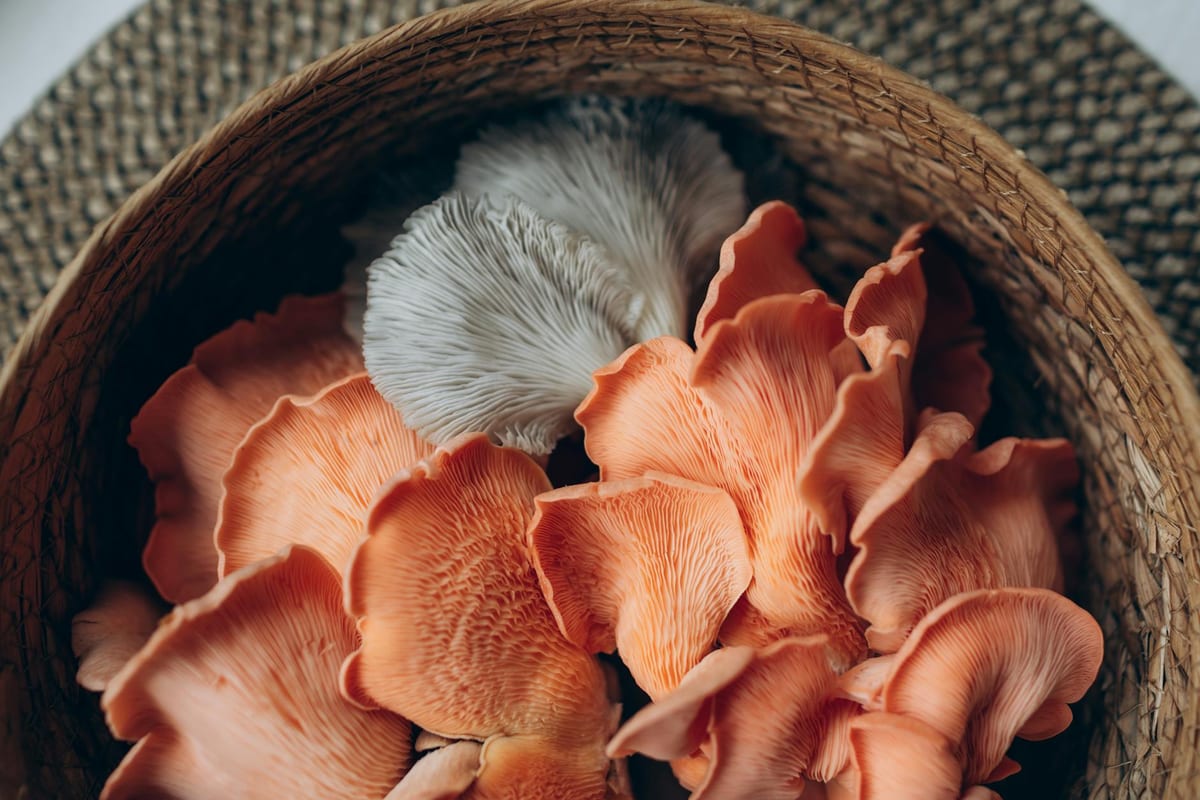
What each one is actually studied for
The three most common functional mushrooms are studied for different things, and matching the mushroom to a realistic, evidence-grounded reason is the first defence against buying a "does everything" blend.
- Reishi (Ganoderma lucidum) is traditionally taken to support immunity and energy. The clinical picture is narrower than the marketing: MSKCC notes evidence for lower urinary tract symptoms and a mild antidiabetic effect, and small studies suggesting immune effects in cancer patients — but randomized trials do not support using it to reduce the cardiovascular risk factors of type 2 diabetes (MSKCC). So reishi is a "considered try," not a heart or diabetes treatment.
- Lion's mane (Hericium erinaceus) draws interest for memory, mood, and stress. MSKCC notes limited clinical data suggesting it may improve memory and mood in some groups (overweight individuals, mild cognitive impairment, older adults, and mild Alzheimer's disease) — but also that there are no human studies showing anti-cancer effects, despite lab activity (MSKCC). Buy it understanding the cognitive claims run ahead of the trials.
- Cordyceps is marketed hardest for energy, stamina, and athletic performance, where the human evidence is thin; its most concrete real-world property is that it interacts with antidiabetic and blood-thinning drugs (MSKCC).
The practical rule: if one product claims a single blend delivers immunity and focus and energy and sleep, that is the breadth of a marketing page, not of the evidence. Pick the mushroom whose studied use most honestly matches what you want, and judge that jar on the checks below.
The decision the label hides: fruiting body vs mycelium-on-grain
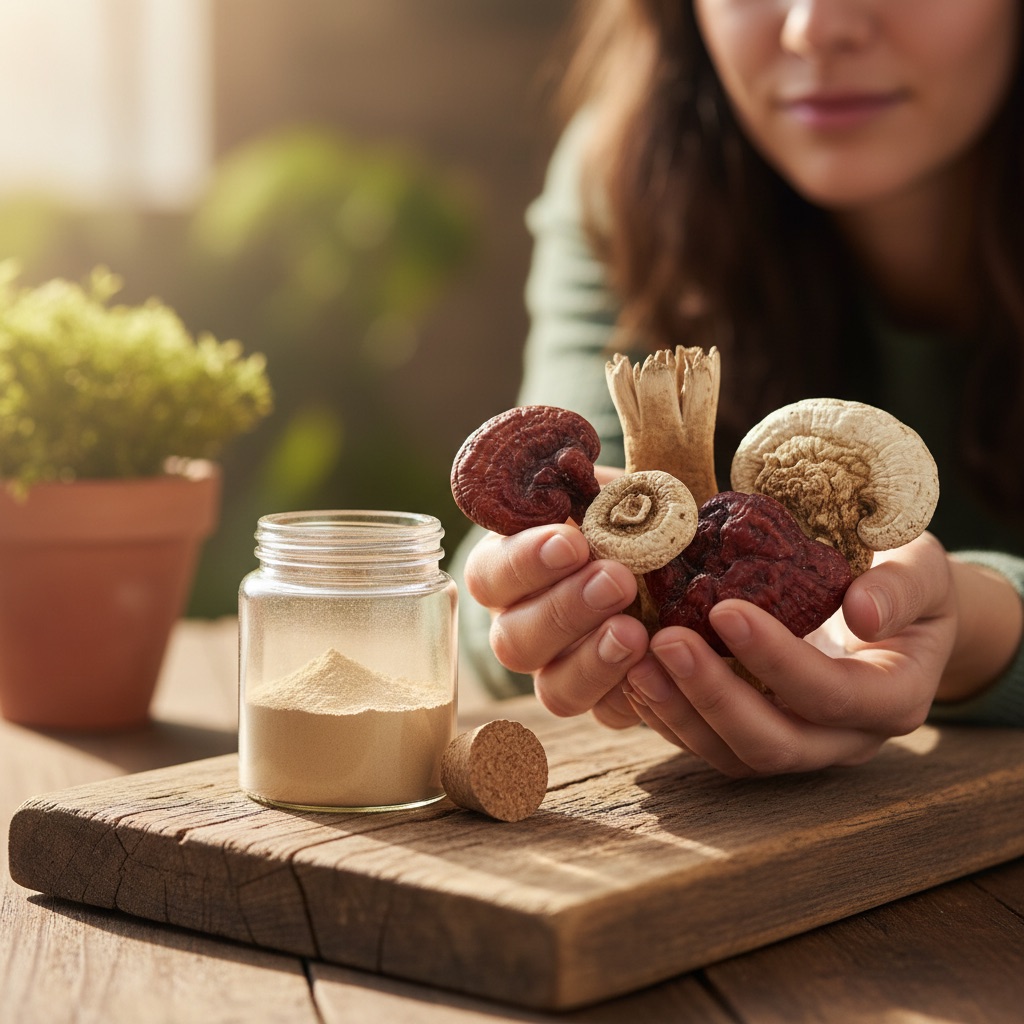
A mushroom has two parts a supplement can be made from. The fruiting body is the mushroom you would recognize — the cap and stem. The mycelium is the root-like network the fungus grows from. Most "mycelium" supplements sold in the West are not pure mycelium; they are mycelium grown on a bed of grain (usually rice or oats), then dried and milled with the grain still in it — a product the industry calls mycelium-on-grain, or MOG.
That distinction decides how much active compound you get, because the immune-active beta-glucans concentrate in the fruiting body. Peer-reviewed analysis comparing the two parts of the same shiitake mushroom found markedly higher beta-glucan content in fruiting bodies than in mycelia (Determination of Glucan Contents in the Fruiting Bodies and Mycelia of Lentinula edodes). Mycelium-on-grain, meanwhile, can be largely the grain it was grown on.
| What's in the jar | Made from | Beta-glucan reality | What the label often says |
|---|---|---|---|
| Fruiting-body extract | The mushroom cap/stem, hot-water or dual extracted | Highest, reliably present | "Fruiting body extract", a stated beta-glucan % |
| Mycelium-on-grain (MOG) | Mycelium + the grain it grew on, milled together | Low; bulk can be grain starch | "Mycelium", "myceliated grain", a big "polysaccharides %" |
| Whole milled powder | Dried mushroom, not extracted | Present but less bioavailable than an extract | "Mushroom powder", often no beta-glucan figure |
None of this makes mycelium fraudulent in principle — but mycelium-on-grain sold without removing the grain, and described with a total-polysaccharide number, is the most common way to pay mushroom prices for starch.
The "polysaccharides" trick
Here is the sleight of hand. Beta-glucans are the specific compounds most mushroom research studies. Polysaccharides is a much broader chemical category that includes beta-glucans but also includes alpha-glucans — and starch is an alpha-glucan. Grain is full of it.
So a label that boasts "40% polysaccharides" is not lying, exactly — it is just measuring a category broad enough to count the grain. A mycelium-on-grain product can post an impressive polysaccharide percentage that is mostly residual starch, while its actual beta-glucan content is in the low single digits. The fix is simple once you know it: look for a stated beta-glucan percentage, and treat a bare "polysaccharides" figure as a number designed to look like potency without proving it.
The five checks for a mushroom supplement
1. Does it say "fruiting body"?
Because the fruiting body reliably carries the beta-glucans; mycelium-on-grain often does not. How: look for "fruiting body extract" stated plainly. If the label says "mycelium," "myceliated grain," or is simply vague about which part it used, assume grain dilution until proven otherwise.
2. Does it state a beta-glucan percentage — not just "polysaccharides"?
Because total polysaccharides can be mostly grain starch; beta-glucan is the number that reflects active content. How: find a specific beta-glucan figure (e.g., ">25% beta-glucans"). A product confident in its sourcing will publish it. A "polysaccharides" number with no beta-glucan figure is the single most common red flag in this category.
3. For reishi especially, is it extracted?
Because reishi's active compounds are locked inside tough, chitinous cell walls that human digestion does not break down well, so a raw milled powder delivers less than a hot-water or dual extract. How: look for "hot-water extract" or "dual extract." Plain "reishi powder" with no extraction step is weaker for the same money.
4. Is there a verifiable third-party seal — ideally with a beta-glucan assay?
Because supplements are not pre-approved by the FDA for what is in the bottle, and mushrooms add a second question (how much active compound). How: look for a named program you can confirm — USP's Dietary Supplement Verification Program or NSF — and, ideally, a certificate of analysis that reports beta-glucan content specifically. "Lab tested" with no named program and no beta-glucan number is marketing.
5. Does the mushroom match the use — and the evidence behind it?
Because reishi, lion's mane, and cordyceps are studied for different things, on mostly preliminary evidence. How: match the mushroom to a realistic, evidence-grounded reason (and read the honest evidence, e.g. on MSKCC's About Herbs). If a single product claims one blend fixes immunity, focus, energy, and sleep at once, that is marketing breadth, not evidence.
Red flags that mean don't buy it
- A "polysaccharides" percentage with no beta-glucan figure. The defining tell of a starch-padded product.
- "Mycelium" or "myceliated grain" with no fruiting-body content. You are likely buying grain.
- No extraction stated for reishi or chaga. Raw powder of a tough-walled mushroom under-delivers.
- "Lab tested" with no named certifier and no beta-glucan assay. Unverifiable.
- One blend that claims to do everything. Immunity, focus, energy, sleep, mood — all at once is a marketing claim, not an evidence base.
Putting it together: two labels
Imagine two reishi jars at a similar price. The first reads: "Reishi mushroom complex, 1,000 mg — 40% polysaccharides — lab tested." Run the checks: it never says fruiting body (check 1 fails), it gives a polysaccharide figure with no beta-glucan number (check 2 fails — that 40% could be largely grain starch), it states no extraction (check 3 fails for a tough-walled mushroom like reishi), and "lab tested" names no certifier (check 4 fails). Four checks failed; you genuinely cannot tell what is in it.
The second reads: "Reishi fruiting-body dual extract — standardized to >25% beta-glucans — third-party tested (certificate of analysis available)." That product names the part (fruiting body), states the active compound as beta-glucans rather than total polysaccharides, discloses the extraction, and points to a verifiable test. It costs more, and the reason it costs more is exactly the reason it is worth comparing on a per-gram-of-beta-glucan basis rather than on shelf price. The first jar is not "cheaper" — it is mostly unknown.
Safety: each mushroom has its own cautions
These are generally treated as well tolerated by healthy adults, but "natural" is not "risk-free," and the interactions below are real.
Reishi. Reported side effects include nausea, insomnia, dry mouth, constipation, itching, and vertigo, and there are case reports of liver toxicity tied to a Ganoderma lucidum formulation, including one fatality (MSKCC). Reishi can also increase bleeding risk with anticoagulants such as warfarin and may not be safe with immunosuppressants — so it is one to clear with a clinician if you take either, or have a procedure coming up.
Lion's mane. Reported side effects are mild — abdominal discomfort, nausea, and skin rash — and MSKCC notes it can also interact with some medications and affect how they work (MSKCC). Its benefits rest on preliminary evidence, and there are no human studies showing anti-cancer effects, so treat strong claims with skepticism.
Cordyceps. It may increase the effects of antidiabetic and anticoagulant or antiplatelet drugs (MSKCC) — meaning blood sugar or bleeding risk can shift if you are already on those medications.
Across all three: if you are pregnant or breastfeeding, take prescription medication, have a hormone-sensitive or autoimmune condition, or have surgery scheduled, treat these as something to discuss with your clinician — not a casual add to cart.
Why we haven't named a product
You will notice we have not told you which mushroom supplement to buy. That is deliberate. We have not tested specific products, and a ranked list of jars nobody opened is the thing we built this site to avoid. Our reviews come from buying at retail, using for a stated window, logging what changed, and disclosing every link — the full method is on our how we vet page, and our affiliate disclosure explains how we handle any links. When mushroom reviews publish, they will appear under Adaptogens with a real testing method beside each, and any "where to buy" link will be marked for what it is. Until then, the five checks above — fruiting body, beta-glucans, extraction, a real seal, and an evidence-matched use — are the same lens we use, and they are enough to keep you from paying mushroom prices for grain.