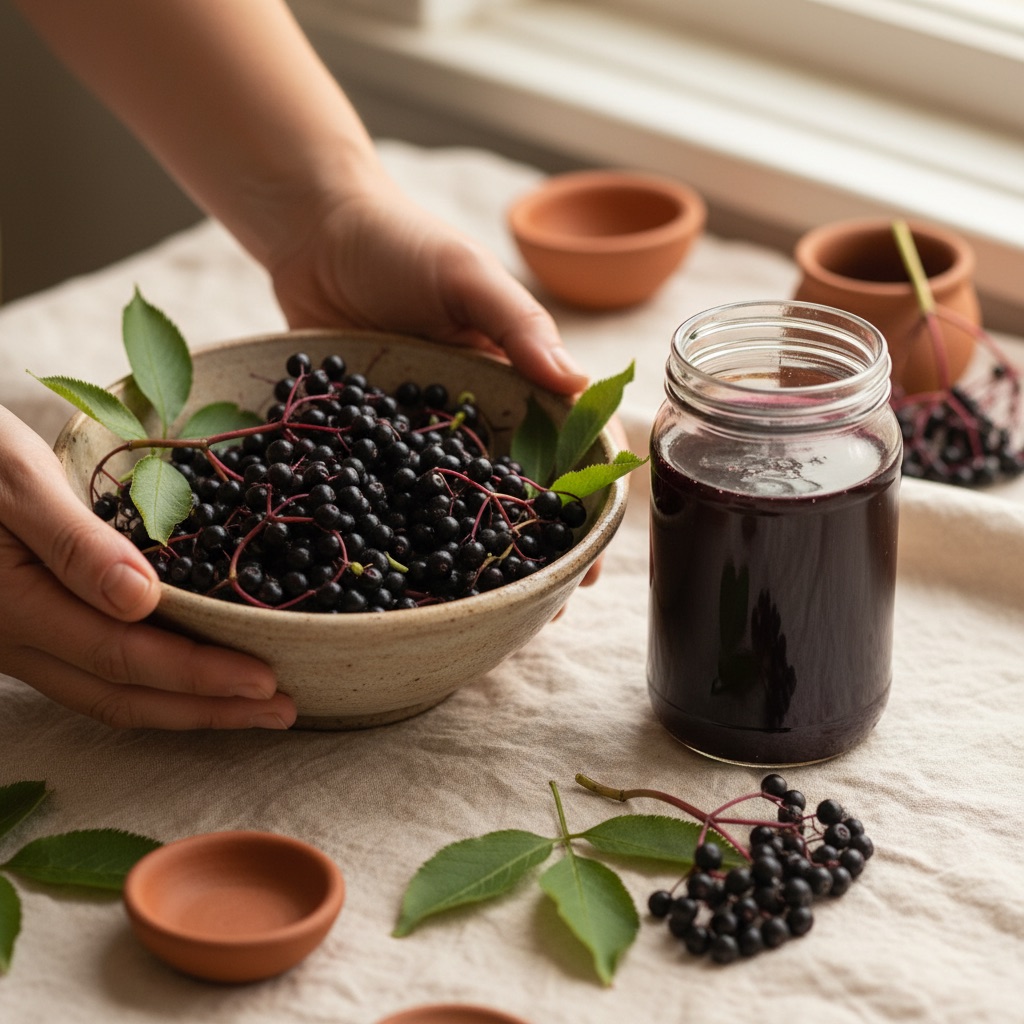
Elderberry is the supplement aisle's cold-season celebrity: deep-purple syrups, jewel-coloured gummies, and "immune support" capsules that fly off the shelf the moment someone in the house sniffles. It is also one of the most over-promised products you can buy — sold on hints of cure it cannot deliver, and, very often, built mostly of sugar. Buying it well means knowing what elderberry can honestly do, and then telling a real elderberry product from flavored sweetener.
This guide does both. It covers the evidence (the encouraging parts and the limits), the forms and their trade-offs, the sugar problem, and the one genuine safety fact most labels skip. We do not rank specific products, because we have not tested them yet, and a ranked list of bottles nobody opened is the thing we built this site to avoid. What you get is the method, so you can judge any bottle yourself.
A note first: this is shopping guidance, not medical advice. Elderberry is sold as a dietary supplement, and the FDA does not approve supplements for safety or effectiveness before sale the way it does prescription drugs (FDA). It is also not a substitute for a flu vaccine or medical care, and raw elderberry carries a real toxicity worth understanding — so read the safety section, and if you're pregnant, take medication, or are treating a sick child, talk to your clinician first. This is a cluster sibling of our herbal tinctures and green tea & matcha guides under the Teas & Tinctures pillar.
What elderberry can — and can't — do
Start with the honest evidence, because the marketing won't. Elderberry has some support for easing cold and flu symptoms, but it is preliminary. NCCIH notes that "a small number of studies have evaluated elderberry for colds, flu, and other upper respiratory infections," and that "some preliminary research suggests that elderberry may relieve symptoms" (NCCIH). The most-cited encouraging result is a 2019 meta-analysis in Complementary Therapies in Medicine that pooled randomized trials and concluded black elderberry (Sambucus nigra) supplementation reduced the duration and severity of upper respiratory symptoms compared with placebo, as cited by NCCIH; a 2016 randomized, placebo-controlled trial in air travellers similarly found elderberry shortened cold duration and severity (randomized trial, 2016). Encouraging — but built on a handful of small studies, which is why the honest summary is "may modestly help," not "proven."
For a second sober read of the research, Memorial Sloan Kettering's integrative-medicine herb database keeps its own elderberry summary worth consulting before you buy (MSKCC). The consistent thread across these authoritative sources is restraint: some promise, thin proof.
Two hard limits. First, elderberry is not a COVID-19 remedy. NCCIH is blunt: "Don't rely on elderberry for prevention or treatment of COVID-19," and the FDA and FTC have taken action against companies marketing it with unsubstantiated coronavirus claims (NCCIH). Second, it is not a replacement for a flu shot or for seeing a doctor when an illness is serious. Held to those limits, elderberry is a reasonable "might take the edge off a cold" purchase — and that modest promise is exactly why you should refuse to overpay for it, or to buy a jar that's mostly sugar.
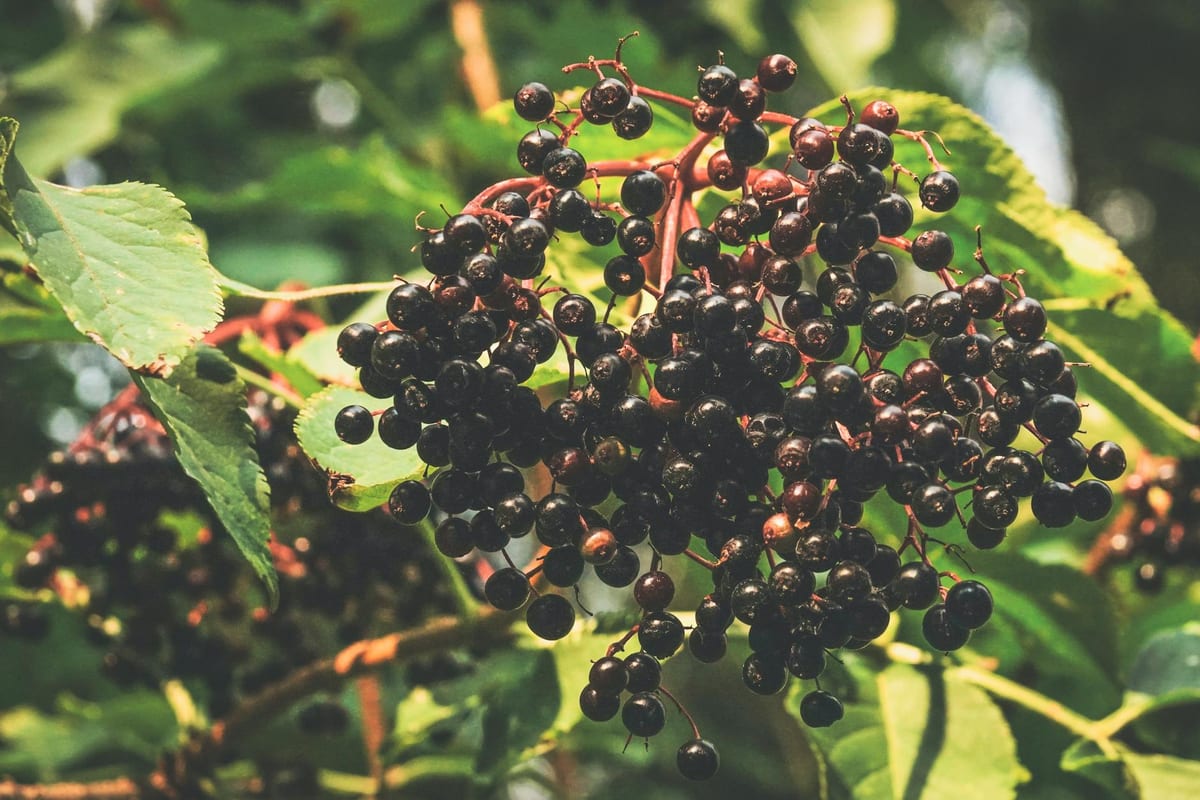
The decision the label hides: real elderberry, or flavored sugar?
Here's the catch that defines this category. Because elderberry is tart and the popular forms are syrups and gummies, sugar is usually doing a lot of the work — and on many products it's doing more of the work than the elderberry. A syrup can be built on a sugar or honey base with a relatively small amount of actual berry extract; a gummy is candy with an "immune" label. The result is a daily dose that delivers meaningful added sugar and an unstated, possibly tiny, amount of the thing you're buying it for.
So the question to bring to the shelf is not "syrup or gummy?" — it's "how much real elderberry extract is in here, and can I even see the number?" A product that states its elderberry amount (and ideally a standardized extract) is one you can judge. One that leads with "proprietary blend," buries the berry behind sweeteners on the ingredient list, and never states a dose is, in the only sense that matters, mostly syrup.
The forms, honestly
| Form | Upside | The catch |
|---|---|---|
| Syrup | Palatable, easy to dose, kid-friendly | Often a sugar or honey base; check added sugar and the stated elderberry amount |
| Gummy | Tastes like candy, convenient | Essentially candy — sugar plus usually a smaller elderberry dose |
| Capsule / tablet | No sugar; easiest to see a stated extract amount | Less pleasant; quality still varies, so check the dose and form |
| Lozenge / powder | Convenient for travel/colds | Read for sweeteners and a real elderberry amount |
There's no single "best" form — there's the form whose trade-off you accept with your eyes open. If you want it sugar-free and dose-legible, a capsule or tablet stating a standardized extract is the cleanest. If you want palatable and will give it to a child, a syrup is fine — just read the sugar and the elderberry amount rather than the "immune support" on the front.
The four checks for an elderberry supplement
1. Is the elderberry amount stated — ideally a standardized extract?
Because the studied benefit came from real amounts of elderberry extract, and "proprietary blend" lets a product hide how little berry is in the bottle. How: look for a stated milligram amount of elderberry (extract), and ideally a standardization (e.g., to anthocyanins or polyphenols). No stated amount is the category's biggest tell that you're buying mostly sweetener.
2. How much added sugar comes with the dose?
Because syrups and gummies often carry significant sugar, and a daily cold-season habit adds up. How: read the nutrition panel for grams of added sugar per serving and the ingredient order. If sugar, honey, or glucose syrup is the first ingredient and the elderberry amount isn't stated, the sweetener is the product.
3. Does it avoid disease and COVID claims?
Because the evidence supports modest symptom relief, not prevention or cure, and COVID claims have drawn FDA/FTC enforcement. How: be wary of any product promising to "prevent the flu," "boost immunity" beyond reason, or help with COVID-19. A label making claims the evidence doesn't support is telling you about the seller, not the berry.
4. Is it from a transparent maker — properly processed and, ideally, third-party checked?
Because elderberry must be cooked/processed to be safe (see below), and supplements aren't pre-screened by the FDA for what's in the bottle. How: buy commercial, properly processed products from a maker that discloses its sourcing — and a verifiable third-party seal or certificate of analysis is a plus. Never use foraged raw berries or homemade raw preparations.
Red flags that mean don't buy it
- No stated elderberry amount. If you can't see the dose, assume it's small and the sugar is the substance.
- Sugar or honey as the first ingredient with the berry unquantified. Flavored syrup with a health halo.
- Any COVID-19 claim, or "prevents the flu." Unsupported, and in COVID's case, enforcement-bait.
- Gummies marketed as a serious "immune" dose. Usually candy with a token amount of extract.
- Anything encouraging raw or homemade elderberry use without cooking.
Putting it together: two products
Picture two cold-season buys at a similar price. The first is "ImmunoBoost Elderberry Gummies," front-of-jar promising to "supercharge your immune system," ingredient panel led by glucose syrup, sugar, then elderberry juice concentrate with no stated milligram amount, and a flourish about "fighting off viruses." Run the checks: no stated elderberry dose (check 1 fails), sugar is the first two ingredients (check 2 fails — it's candy), and the virus-fighting language overshoots the evidence (check 3 fails). For a daily habit, you'd mostly be buying sweetened gelatin.
The second is plainer: "Black elderberry (Sambucus nigra) extract 600 mg, standardized to anthocyanins, per capsule — no added sugar," from a maker that states its sourcing and offers a certificate of analysis. It tells you how much berry you're getting, carries no sugar, makes no disease claims, and is a properly processed commercial extract. It's less fun than a gummy and the obviously sounder buy — and you can see exactly what your money is for.
The contrast is the whole guide in miniature: a stated dose you can verify beats a sweet promise you can't.
How to use it sensibly (if you use it)
If you decide elderberry is worth a try, treat it the way the evidence suggests: as something that might shorten or soften a cold or flu, taken at the first signs and for a short stretch, alongside the basics that actually carry the load — rest, fluids, and, for flu, a vaccine. Don't take it as a year-round "immune booster" on the theory that more is better; the studies are about symptom relief during an illness, not daily prevention, and a daily sugary syrup has a real downside of its own. And if an illness is severe, persistent, or you're in a higher-risk group, that's the moment for medical care, not another dose.
Safety: the part most labels skip
Commercial elderberry products, made from cooked and processed berries, have a good safety record. The genuine hazard is the raw plant.
Raw elderberry is toxic. NCCIH is clear: "Raw or unripe elderberries and other parts of the elder tree, such as the leaves and stem, contain poisonous cyanide-producing substances that can cause nausea, vomiting, and severe diarrhea; cooking eliminates this toxin" (NCCIH). This is why commercially processed syrups and extracts are considered safe while foraged raw berries — or a well-meaning homemade raw "syrup" — are not. If you make elderberry at home, it must be properly cooked; better, buy a commercial product.
Other cautions. Little is known about whether elderberry is safe during pregnancy or breastfeeding, so that's a clinician conversation. And because herbs can interact with medicines, NCCIH advises talking with your health care provider before using elderberry if you take any medication (NCCIH). If you have an autoimmune condition or take immune-modulating medication, raise it with your clinician before adding an "immune support" supplement, rather than assuming it's harmless.
And the overarching one: elderberry is not a flu vaccine and not a treatment for a serious infection. If symptoms are severe, worsening, or you're in a high-risk group, that's a reason to seek care — not to reach for another spoonful of syrup.
Why we haven't named a product
You'll notice we haven't told you which elderberry to buy. That's deliberate. We have not tested specific products, and a ranked list of bottles nobody opened is the thing we built this site to avoid. Our reviews come from buying at retail, using for a stated window, logging what changed, and disclosing every link — the full method is on our how we vet page, and our affiliate disclosure explains how we handle any links. When elderberry reviews publish, they'll appear under Teas & Tinctures with a real testing method beside each. Until then, the four checks above — a stated elderberry amount, sane sugar, no disease claims, and a transparent, properly-processed maker — are enough to buy a real elderberry product instead of flavored sweetener.